The Great Gatsby reading and creativity project
First, make sure you’ve turned in you Peregrine Pickle Essay Prompt before MIDNIGHT tonight (Thursday).
Next–we’re reading Gatsby! You will need to
a) pick up a copy from the office–Mr. Reynolds will run a copy out to you, but I have only 24 copies so it’s first come, first served; or,
b) read it online here.
And I’m giving you a lot of freedom. So here’s what I expect–by NEXT TUESDAY, April 28, you should:
- have read the entire novel (it’s not a hard read at all);
- have completed one of creative projects listed here. (If you have another idea for a project, let me know.)
Notice that the DUE DATE for the project is TUESDAY, April 28th. That’s because I anticipate by Monday, I’ll have a few people messaging me in a panic saying, “Wait, is that due today?!” and I can say, “No, tomorrow–so hurry up!”
I will assign you an essay–Prose Prompt #2 style–to write, likely for Wednesday. We’ll have a Zoom Meeting on Tuesday, April 28th to discuss it first. But if you haven’t read the book, you’ll struggle with the essay. SO READ THE BOOK! (You’ll need to in order to complete a creative project appropriately.)
SHARE with me your project once it’s completed. If you finish early and want to share it early, go ahead. Otherwise, it’s due Tuesday, April 28th.
I will compile all of them on the website so we can all see what everyone did. This should be pretty fun and entertaining. (You will also be required to write a quick review of TWO of the projects, but that won’t be until later that week.)
Here’s the Zoom Meeting from today where I try to explain aspects of the project and give some background about Gatsby.
GREAT GATSBY BACKGROUND:
Watch this short video to learn about F. Scott Fitzgerald, who “captured perfectly the 1920s.” Think about how different the 2020s are or might be.
(This video is fun in that you see how people lived back then–real photos, not recreations.)
Here are some great insights I stole from someone else:
THE JAZZ AGE
F. Scott Fitzgerald became famous as the chronicler of the 1920s. According to several sources, Fitzgerald named the 1920s the Jazz Age. He was right. Music celebrated the emotions of the people who believed America was at its peak. The snazzy tunes ran through the veins of flappers and their dance partners. The music gave way to freedom, or so it seemed. Men like Louis Armstrong and Duke Ellington began paving the way for exploration in American musical style.

These dresses–everywhere!

FAMOUS PEOPLE
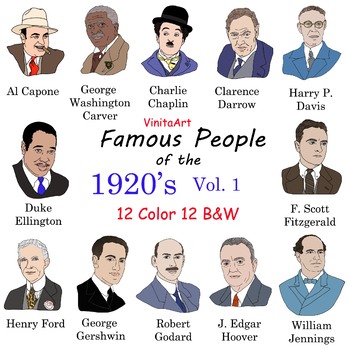
The 1920s in America produced many famous people: Al Capone, Charlie Chaplin, Henry Ford, Gaston Chevrolet, “Bugs” Moran, and Clara Bow. The Volstead Act of 1919 gave life to such characters as Bugs Moran and Al Capone. One famous, mysterious incident between the two men was the St. Valentine’s Day Massacre. The mystery around the murders still provokes curiosity today. In the infant stages of the movie industry, one famous little tramp emerged–Charlie Chaplin.
THE AUTOMOBILE
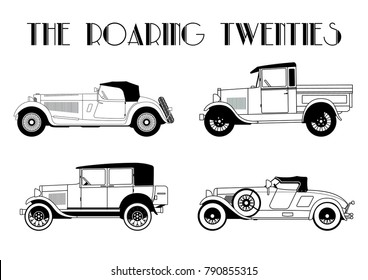
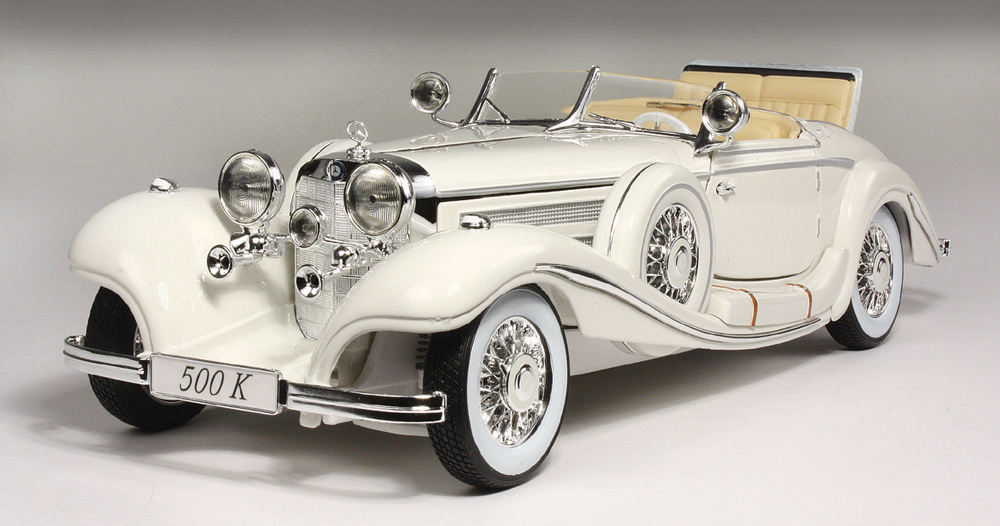
One important symbol in Fitzgerald’s The Great Gatsby is the automobile. It represents the reckless convictions of the flapper society. At the beginning of the novel, the reader hears Nick’s account of a party where a car wrecks and chaos abounds. The automobile was a dangerous weapon in the hands of carefree, irresponsible people. It still is; Fitzgerald’s lesson lives on.
Dresses+cars

TRENDS
One memorable dance developed in the 1920s was the Charleston. Other trends in entertainment came in the movie industry. Further, some of the most famous people of the 1920s were flappers. These women set fashion trends for years to come, along with some dance moves.
(Seriously, guys–could you imagine any of you dancing at prom like this? These moves actually take some real skill and practice!)
Keep all of these ideas and images in mind as you read the book. It helps to be in a 1920s mood.
Lastly, check out this. Libraries used to be “Google” in that people would call a library to find out information. Not long ago, the questions gathered by librarians in the New York City library were discovered. This one looks like it should have been dated 1922 (not 1967):
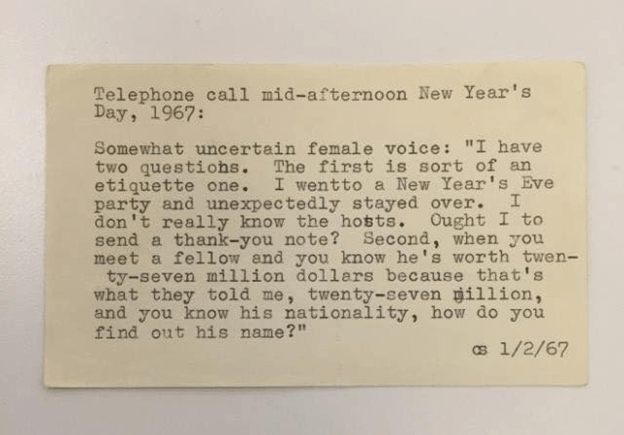
(Man, I really want to know how that story above ended!)
But none of the Roaring Twenties was going to last:
America’s era of prosperity would come to a screeching halt with the stock market crash of 1929 and the onset of the Great Depression. By 1930, 4 million Americans were unemployed; that number would reach 15 million by 1933, the Depression’s lowest point.
https://www.history.com/news/great-gatsby-roaring-twenties-fitzgerald-dark-side
 AP Lit, Washington Academy